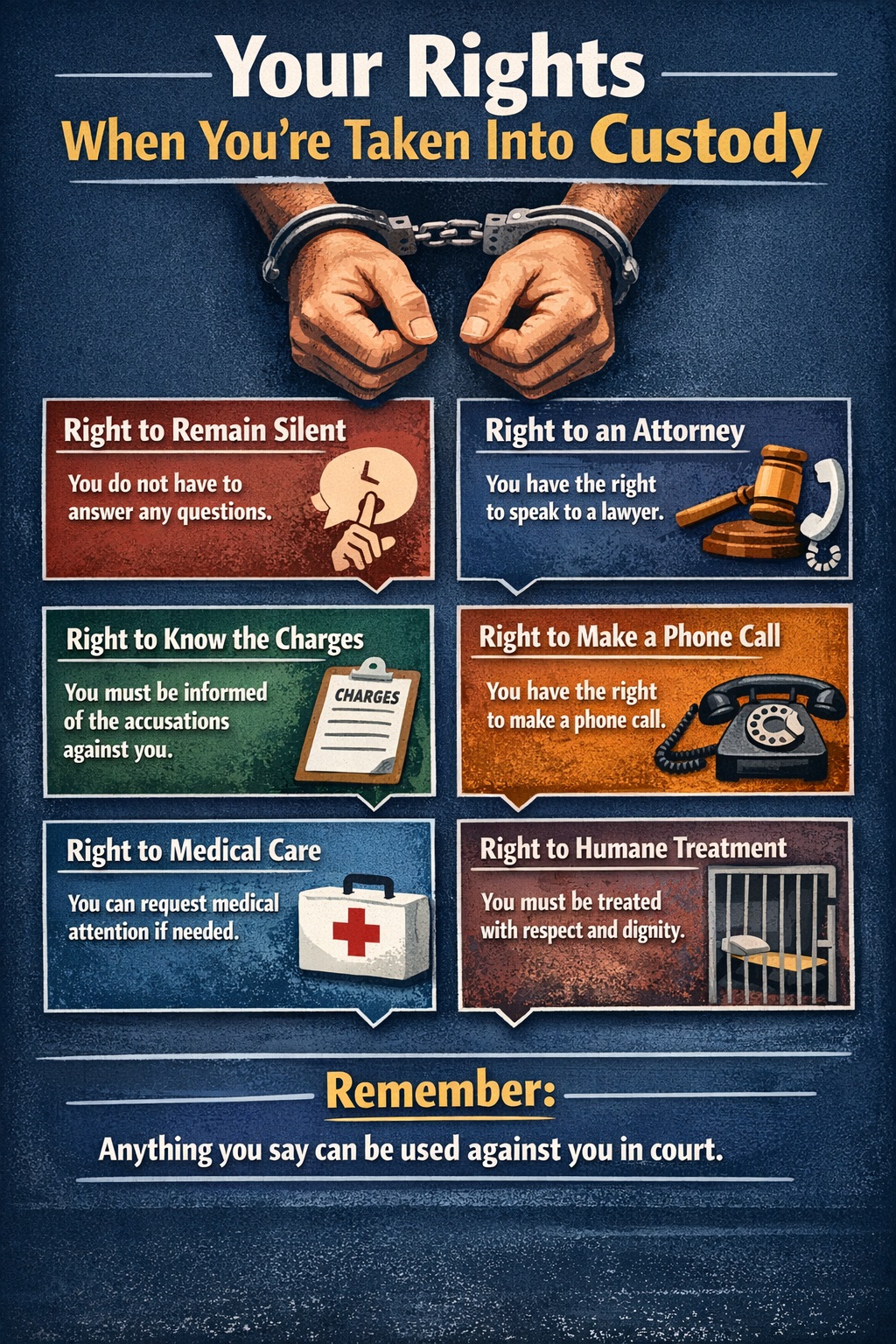
Being taken into custody can be overwhelming, frightening, and confusing—especially if it’s your first encounter with the criminal justice system. Regardless of the charges, every person has fundamental legal rights protected under the U.S. Constitution. Knowing these rights can make a significant difference in how your case unfolds, and can protect you from self-incrimination, coercion, or unlawful detention.
In this article, we’ll break down the essential rights you have when you’re arrested or detained, what to expect during the process, and how to protect yourself during those critical early hours.
Your Right to Remain Silent (Fifth Amendment)
One of the most important rights you have when you’re in custody is the right to remain silent. This means you are not required to answer any questions from law enforcement officers once you’ve been detained or arrested.
Anything you say can—and will—be used against you in court.
Police are required to inform you of your Miranda rights, which include the right to remain silent and the right to an attorney. These rights kick in once you’re officially in custody and subject to interrogation.
Your Right to an Attorney (Sixth Amendment)
You also have the right to legal counsel once you’re taken into custody. If you cannot afford an attorney, one will be provided to you. This ensures that everyone, regardless of financial status, can access legal representation before speaking with police or appearing in court.
Never waive your right to a lawyer under pressure. Even if you think you have nothing to hide, legal counsel can guide you through procedures and prevent accidental self-incrimination.
Your Right to Know the Charges Against You
Once arrested, you have the right to know exactly why you are being detained. Law enforcement must inform you of the charges, and in most jurisdictions, you must be brought before a judge within a specific timeframe—usually within 48 to 72 hours.
This initial appearance, known as an arraignment, is when you are formally charged and have an opportunity to request bail.
Right to Reasonable Bail
Unless you’re charged with a particularly serious crime or deemed a flight risk, you’re entitled to reasonable bail under the Eighth Amendment. Bail allows you to leave custody while awaiting trial.
If you’re arrested and processed in a smaller facility like the Tahlequah jail, local procedures may vary slightly, but the fundamental right to request bail still applies. You or a loved one may need to work with a bail bonds service to facilitate release.
You Have the Right to Humane Treatment
Law enforcement officers must treat detainees humanely. While jail is not comfortable, you still have the right to:
- Adequate food and water
- Access to medical care if needed
- Protection from abuse or harassment
- Reasonable accommodations for disabilities
If your rights are violated while in custody, those violations can be challenged in court and may even impact the outcome of your case.
What You Should and Shouldn’t Do in Custody
DO:
- Politely assert your right to remain silent
- Ask for an attorney and wait until they arrive
- Remain calm and respectful
- Document or remember the events if you believe your rights were violated
DON’T:
- Try to explain or defend your actions to officers
- Sign any documents without a lawyer present
- Resist arrest, even if you believe it’s unjust
The First 24 Hours: What to Expect
The first 24 hours of being in custody are crucial. You may be:
- Booked (fingerprinted, photographed, personal property taken)
- Questioned (if you haven’t invoked your right to remain silent)
- Placed in a holding cell or transferred to a county jail like the Tahlequah jail
- Given a preliminary hearing or arraignment
This period sets the stage for how your case will progress. Being informed, composed, and legally represented during this window is essential.
Conclusion
Being taken into custody doesn’t mean you lose your rights—it means they become even more important. Understanding and asserting these rights can protect you from unjust treatment, strengthen your legal defense, and ensure due process is upheld.
Whether you’re arrested in a major city or booked in a smaller facility like the Tahlequah jail, the constitutional protections remain the same. Arm yourself with knowledge so that if the time comes, you’re prepared to protect yourself.